The History Society
Deus Dat Incrementum
1553
The Tonbridge
Story
Four hundred and seventy-five years
Eight chapters, eight objects, and the names that survive
Contents
Read backwards — from 2028 to 1553
- IA gift, and a new chapter20287
- IIA school of eight hundred1945–200011
- IIIThree hundred and one names1939–194515
- IVFour hundred and fifteen names1914–191819
- VTwelve blocks of pews1900s23
- VIA town school becomes a national one1840s–189727
- VIIForty boys and a visitation1553–1830s31
- VIIIA merchant's school155335
❦
How to read
This book is read backwards. It opens in 2028, with the School as it is about to become, and ends in 1553, with a merchant's money in a market town — so each chapter explains the one before it, and the last page is the beginning.
Each chapter opens on a plate — the place as it is now, or, where the archive has no picture yet, a space kept for one. The facing page carries the chapter's object, a voice from the record, and what still survives.
Turn with the arrow keys, the page edge, or a swipe.
2028
I
Chapter I
A gift, and a new chapter
In the School's 475th year the Sixth Form opens to girls — and this site is the History Society's gift.
1 of 8 · counting back to 1553
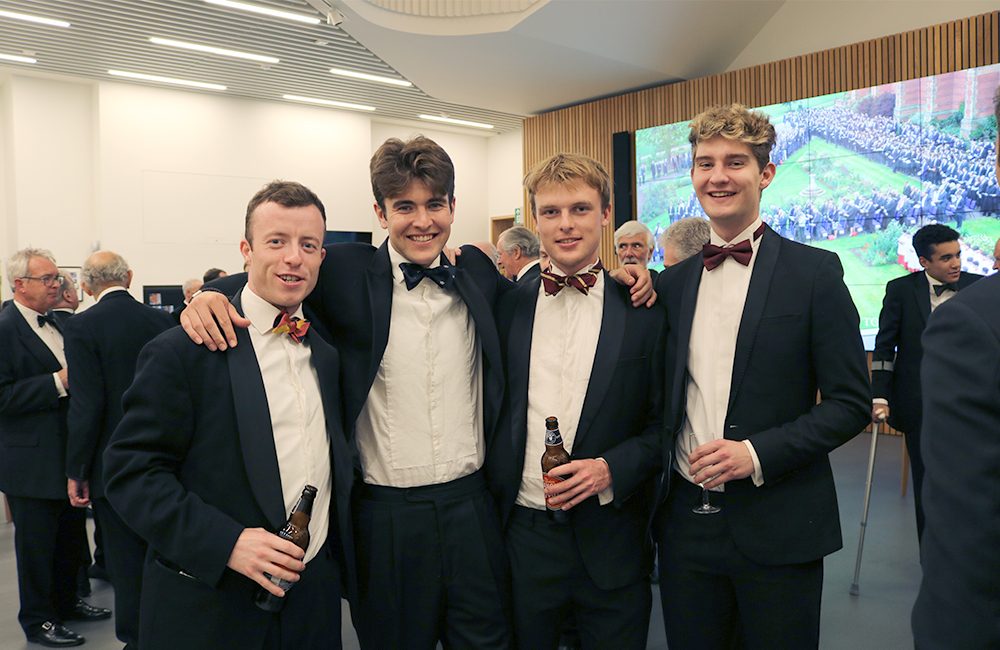
The 145th Old Tonbridgian Dinner, 2021.
This website. Made by students, for the 475th year. It has no database and no tracking; it will still open in twenty years.
7Only connect the prose and the passion, and both will be exalted, and human love will be seen at its height. Live in fragments no longer.
E. M. Forster, Old Tonbridgian — the School's own motto-line
I · A gift, and a new chapter
2028
A gift, and a new chapter
In the School's 475th year the Sixth Form opens to girls — and this site is the History Society's gift.
In September 2028 — the School's 475th anniversary year — the Sixth Form will admit girls for the first time. The Lower School will remain a boys' school.
This site is a gift from the History Society: eight chapters of the School's story, a plan of its places, and a memorial list. It is meant to be read by students and parents, not to advertise the School, but to help people know it.
What survives: A co-educational Sixth Form, and this book of the School's story.
8I · A gift, and a new chapter
2028
A gift, and a new chapter
In the School's 475th year the Sixth Form opens to girls — and this site is the History Society's gift.
In September 2028 — the School's 475th anniversary year — the Sixth Form will admit girls for the first time. The Lower School will remain a boys' school.
This site is a gift from the History Society: eight chapters of the School's story, a plan of its places, and a memorial list. It is meant to be read by students and parents, not to advertise the School, but to help people know it.
This website. Made by students, for the 475th year. It has no database and no tracking; it will still open in twenty years.
Only connect the prose and the passion, and both will be exalted, and human love will be seen at its height. Live in fragments no longer.
E. M. Forster, Old Tonbridgian — the School's own motto-line
What survives: A co-educational Sixth Form, and this book of the School's story.
4
1945–2000
II
Chapter II
A school of eight hundred
Numbers doubled, buildings spread, and the day-to-day life of a boy changed out of recognition.
2 of 8 · counting back to 1553
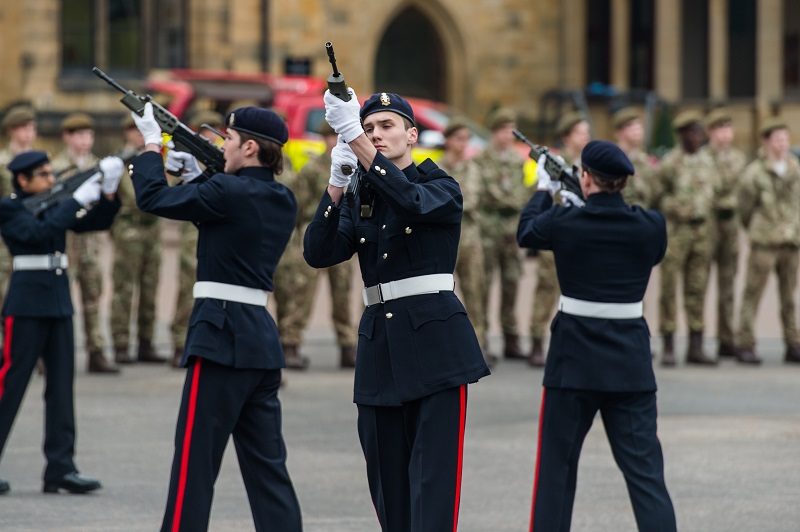
CCF inspection day: the School's uniformed corps on parade.
The Barton Science Centre. It stands for the post-war expansion: the School kept its old shape and kept adding to it.
11You have ignited a fire here in Tonbridge for learning and discovery, and for achieving something special.
Opening of the Barton Science Centre
II · A school of eight hundred
1945–2000
A school of eight hundred
Numbers doubled, buildings spread, and the day-to-day life of a boy changed out of recognition.
After 1945 pupil numbers doubled. Tonbridge became one of the country's foremost academic schools, and the estate grew with it: a science centre, a music school, sports facilities, and a much wider programme of activities.
The school kept its shape — Houses, chapel, games — but the day-to-day life of a Tonbridge boy changed beyond recognition from the small grammar school of Judde's statutes.
What survives: About 800 boys, twelve Houses, and a much larger estate.
12II · A school of eight hundred
1945–2000
A school of eight hundred
Numbers doubled, buildings spread, and the day-to-day life of a boy changed out of recognition.
After 1945 pupil numbers doubled. Tonbridge became one of the country's foremost academic schools, and the estate grew with it: a science centre, a music school, sports facilities, and a much wider programme of activities.
The school kept its shape — Houses, chapel, games — but the day-to-day life of a Tonbridge boy changed beyond recognition from the small grammar school of Judde's statutes.
The Barton Science Centre. It stands for the post-war expansion: the School kept its old shape and kept adding to it.
You have ignited a fire here in Tonbridge for learning and discovery, and for achieving something special.
Opening of the Barton Science Centre
What survives: About 800 boys, twelve Houses, and a much larger estate.
6
1939–1945
III
Chapter III
Three hundred and one names
A second war, a School that nearly left, and the same wall.
3 of 8 · counting back to 1553
Remembrance Sunday on the lawn, November 2018.
The same memorial, extended. The ante-chapel now carries 716 names: 415 from the first war, 301 from the second.
15Remembrance can't just be an annual event … The legacy of sacrifice is with us every day and should be just as fresh as the day that sacrifice was made.
Address at the Service of Remembrance, 2018
III · Three hundred and one names
1939–1945
Three hundred and one names
A second war, a School that nearly left, and the same wall.
The Second World War killed 301 Old Tonbridgians. In 1940 the School was nearly evacuated in the face of an expected invasion, but stayed, and lived through the Battle of Britain and the Blitz.
The two wars set the shape of the School's memory: a list of names, a service in November, and the quiet of the ante-chapel. On Remembrance Sunday the whole School walks up to the chapel.
What survives: The November service, and the wall.
16III · Three hundred and one names
1939–1945
Three hundred and one names
A second war, a School that nearly left, and the same wall.
The Second World War killed 301 Old Tonbridgians. In 1940 the School was nearly evacuated in the face of an expected invasion, but stayed, and lived through the Battle of Britain and the Blitz.
The two wars set the shape of the School's memory: a list of names, a service in November, and the quiet of the ante-chapel. On Remembrance Sunday the whole School walks up to the chapel.
The same memorial, extended. The ante-chapel now carries 716 names: 415 from the first war, 301 from the second.
Remembrance can't just be an annual event … The legacy of sacrifice is with us every day and should be just as fresh as the day that sacrifice was made.
Address at the Service of Remembrance, 2018
What survives: The November service, and the wall.
8
1914–1918
IV
Chapter IV
Four hundred and fifteen names
The School lost 415 Old Tonbridgians in the First World War. The archive remembers them one at a time.
4 of 8 · counting back to 1553
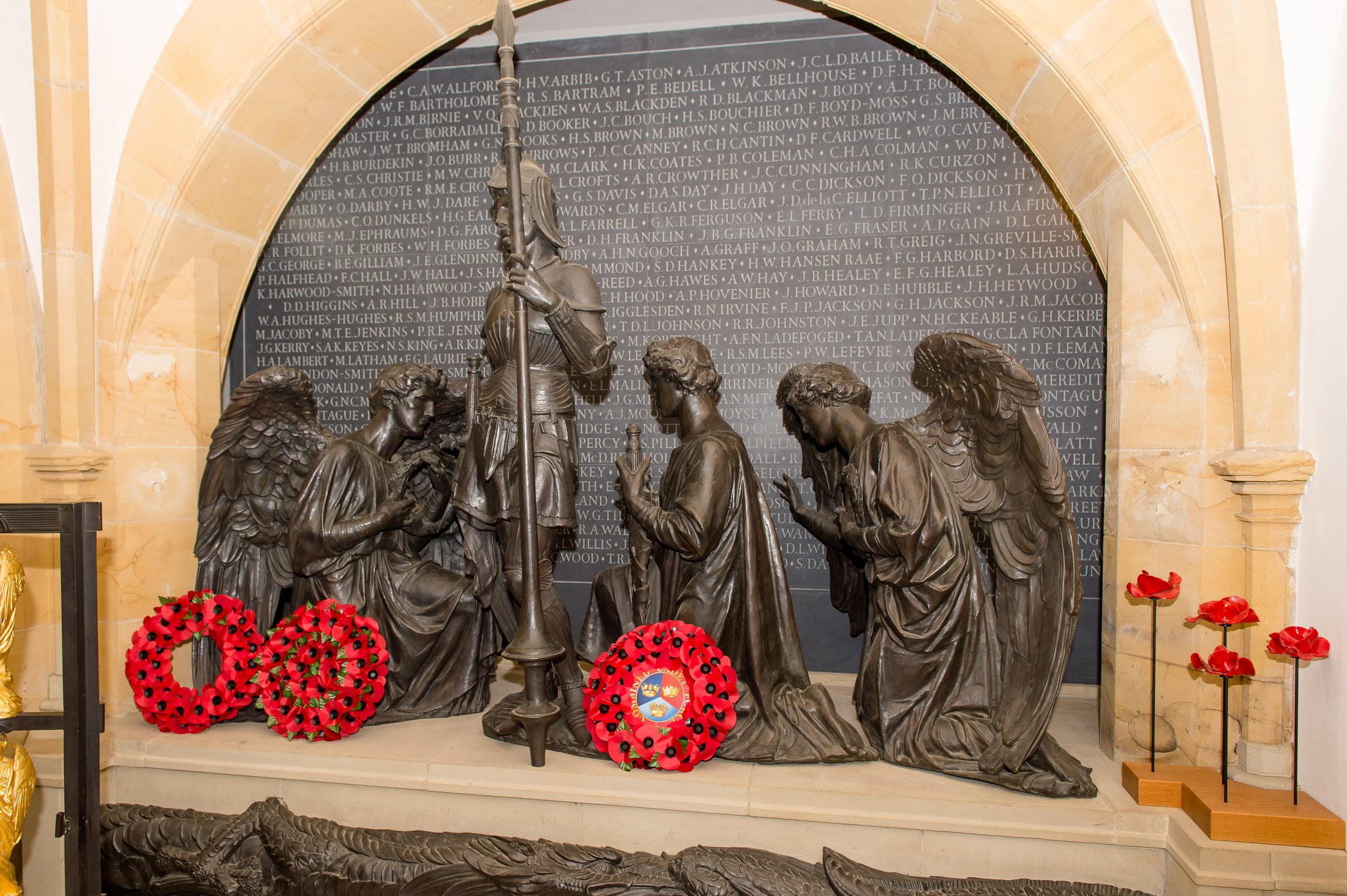
The war memorial in the ante-chapel; wreaths laid each November.
The names in the ante-chapel. 415 names from 1914–18, cut in stone and iron. They are read aloud at the Remembrance service each November.
19We are all very distressed at the death of Jackson. He was most popular with all ranks of the Regiment and was a most gallant officer.
Lieutenant W F Jackson's commanding officer, 1918
IV · Four hundred and fifteen names
1914–1918
Four hundred and fifteen names
The School lost 415 Old Tonbridgians in the First World War. The archive remembers them one at a time.
The First World War killed 415 Old Tonbridgians. Their names are cut in stone and iron in the ante-chapel. The School remembers them one person at a time: the archive's The Last Ten Fallen follows the last ten men to die, in the final weeks of the war.
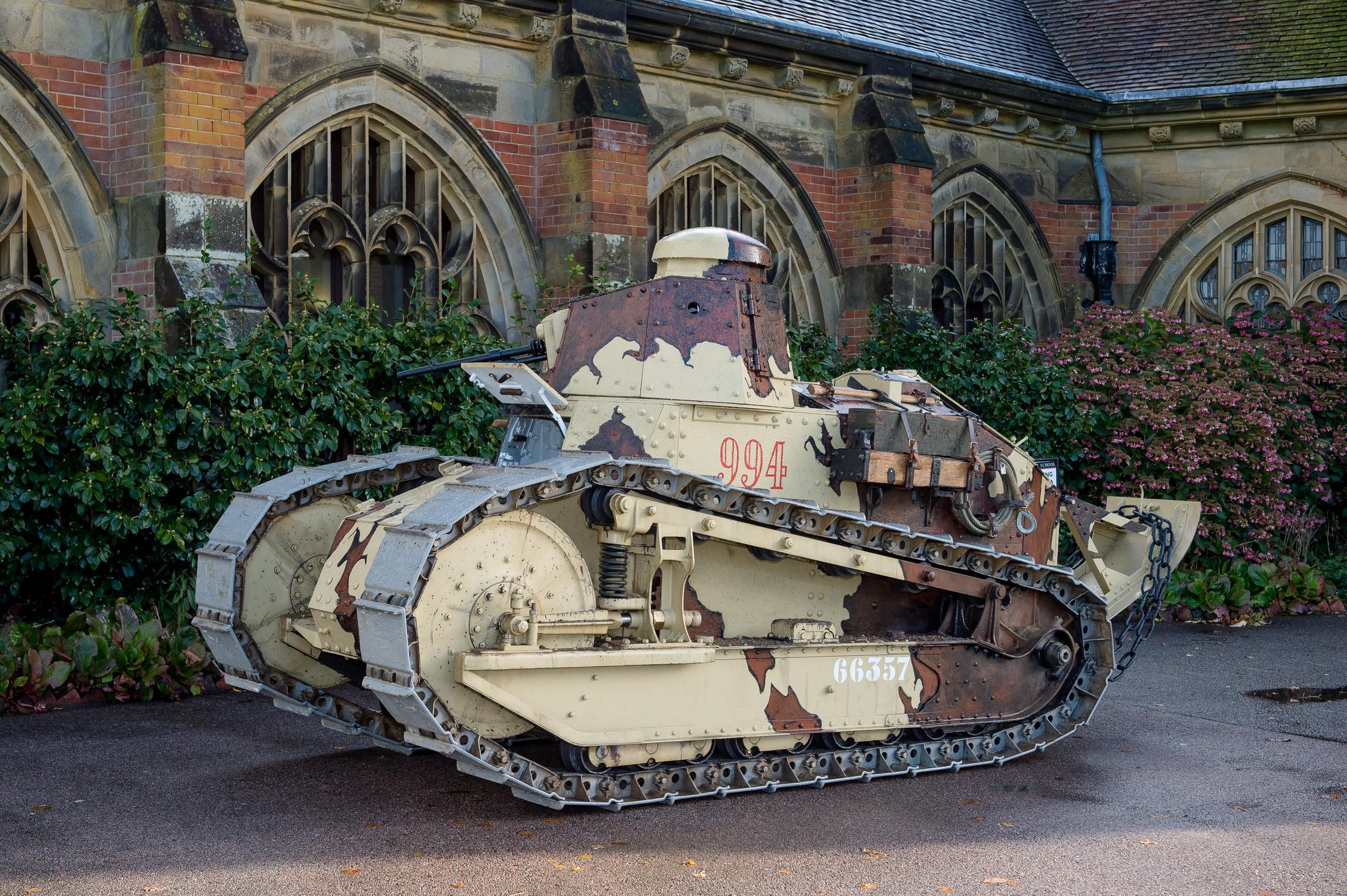
A Mark IV tank stood on the lawn after the war as a memorial to the work of the Tank Corps; these photographs were taken at the 2018 Remembrance service, a hundred years after the armistice.
What survives: The names, the November service, and the wreaths on the memorial.
20IV · Four hundred and fifteen names
1914–1918
Four hundred and fifteen names
The School lost 415 Old Tonbridgians in the First World War. The archive remembers them one at a time.
The First World War killed 415 Old Tonbridgians. Their names are cut in stone and iron in the ante-chapel. The School remembers them one person at a time: the archive's The Last Ten Fallen follows the last ten men to die, in the final weeks of the war.
A Mark IV tank stood on the lawn after the war as a memorial to the work of the Tank Corps; these photographs were taken at the 2018 Remembrance service, a hundred years after the armistice.
The names in the ante-chapel. 415 names from 1914–18, cut in stone and iron. They are read aloud at the Remembrance service each November.
We are all very distressed at the death of Jackson. He was most popular with all ranks of the Regiment and was a most gallant officer.
Lieutenant W F Jackson's commanding officer, 1918
What survives: The names, the November service, and the wreaths on the memorial.
10
1900s
V
Chapter V
Twelve blocks of pews
A chapel built on the plan of the School itself: one block of seats for each House.
5 of 8 · counting back to 1553
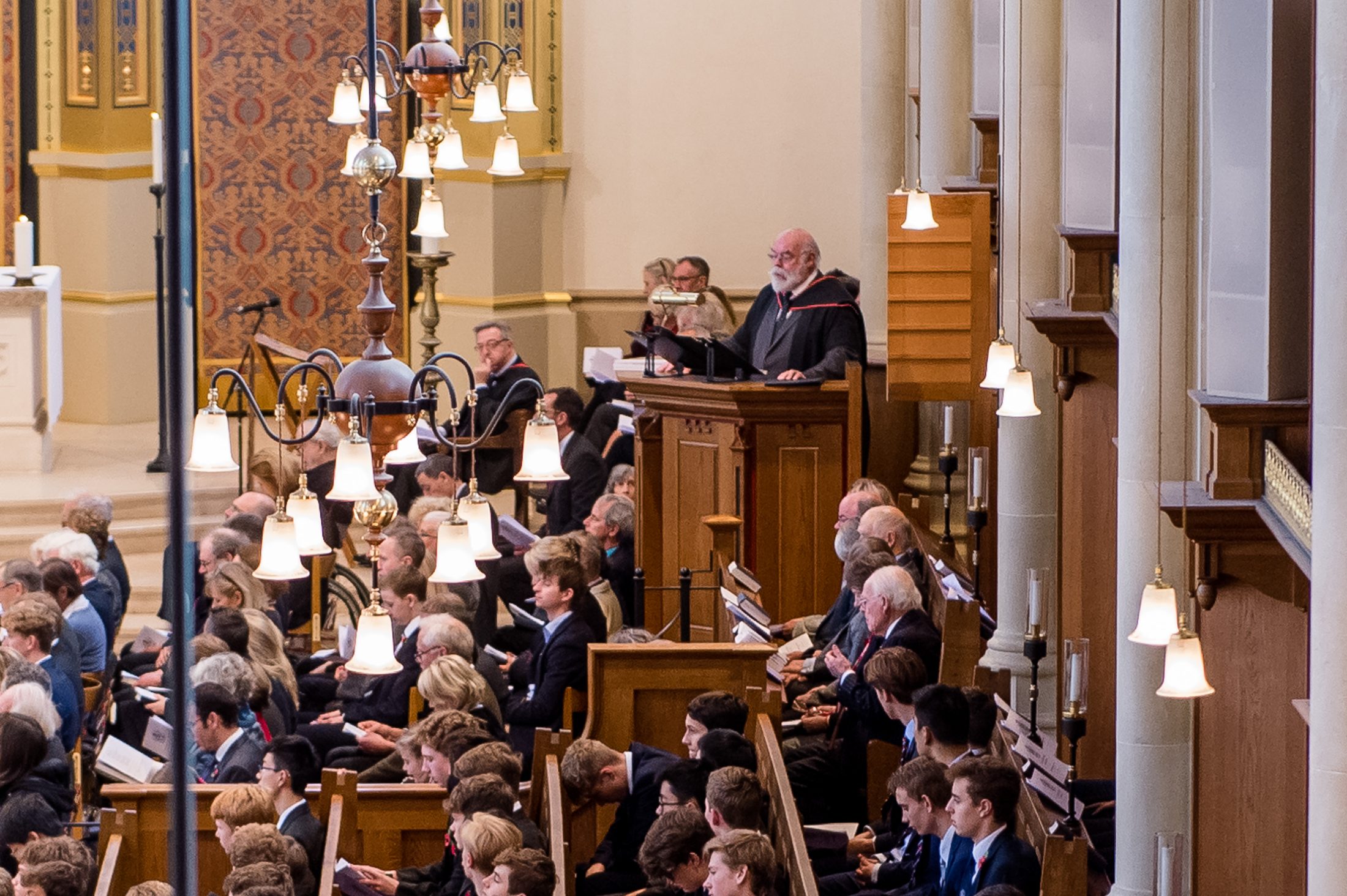
The Chapel of St Augustine of Canterbury, filled for a service.
The fifteenth-century stone figure. It is the one object that came through the 1988 fire. Everything else in the chapel is either later or was remade.
23V · Twelve blocks of pews
1900s
Twelve blocks of pews
A chapel built on the plan of the School itself: one block of seats for each House.
The Edwardian chapel is built on a collegiate plan: twelve blocks of pews, one for each House, facing the stone high altar. The ante-chapel is the school's war memorial.
In September 1988 the chapel was badly damaged by fire; almost everything inside was destroyed except a fifteenth-century stone figure. Restoration took seven years, and it was reconsecrated in 1995.
What survives: The restored chapel, and the figure that survived the fire.
24V · Twelve blocks of pews
1900s
Twelve blocks of pews
A chapel built on the plan of the School itself: one block of seats for each House.
The Edwardian chapel is built on a collegiate plan: twelve blocks of pews, one for each House, facing the stone high altar. The ante-chapel is the school's war memorial.
In September 1988 the chapel was badly damaged by fire; almost everything inside was destroyed except a fifteenth-century stone figure. Restoration took seven years, and it was reconsecrated in 1995.
The fifteenth-century stone figure. It is the one object that came through the 1988 fire. Everything else in the chapel is either later or was remade.
What survives: The restored chapel, and the figure that survived the fire.
12
1840s–1897
VI
Chapter VI
A town school becomes a national one
A train, a sale of London land, and the buildings that are still in use.
6 of 8 · counting back to 1553
1840s–1897
No photograph yet.
The School Archives hold it;
the space is kept.
A plate to come
St Pancras Station. The station was built on the School's land. The sale paid for the buildings the School still uses — a London railway terminus and a Kentish school are, financially, the same story.
27VI · A town school becomes a national one
1840s–1897
A town school becomes a national one
A train, a sale of London land, and the buildings that are still in use.
The railway reached Tonbridge in the 1840s. Professional families — lawyers, doctors, engineers, men who worked for the Empire — began to send their sons. Numbers rose from 139 in 1845 to 447 by 1897.
In 1862 the school sold the St Pancras pasture land that Judde had left it, and the buyer was the railway company building St Pancras Station. With the money the old buildings were largely demolished and the present main buildings went up. Boarding Houses followed between 1870 and 1894.
What survives: The station still stands; so do the buildings the sale paid for.
28VI · A town school becomes a national one
1840s–1897
A town school becomes a national one
A train, a sale of London land, and the buildings that are still in use.
The railway reached Tonbridge in the 1840s. Professional families — lawyers, doctors, engineers, men who worked for the Empire — began to send their sons. Numbers rose from 139 in 1845 to 447 by 1897.
In 1862 the school sold the St Pancras pasture land that Judde had left it, and the buyer was the railway company building St Pancras Station. With the money the old buildings were largely demolished and the present main buildings went up. Boarding Houses followed between 1870 and 1894.
St Pancras Station. The station was built on the School's land. The sale paid for the buildings the School still uses — a London railway terminus and a Kentish school are, financially, the same story.
What survives: The station still stands; so do the buildings the sale paid for.
14
1553–1830s
VII
Chapter VII
Forty boys and a visitation
For nearly three centuries it was a small town school, and once a year it had to explain itself.
7 of 8 · counting back to 1553
1553–1830s
No photograph yet.
The School Archives hold it;
the space is kept.
A plate to come
The annual account. The School's own history describes the Visitation as the moment each year when the Company would “receive from the Headmaster an account of the year's activities”.
31VII · Forty boys and a visitation
1553–1830s
Forty boys and a visitation
For nearly three centuries it was a small town school, and once a year it had to explain itself.
For nearly three centuries Tonbridge remained a small local school. Numbers drifted between forty and ninety; the boys were day boys from the town, and the school's income came from Judde's endowment.
Once a year the Company's Master, Wardens and Court travelled down for the Visitation — Skinners' Day — to meet the staff and boys, give prizes, and receive the Headmaster's account of the year. The school's habit of accounting for itself is older than any building on the site.
What survives: Skinners' Day is still kept, and the Headmaster still gives an account of the year.
32VII · Forty boys and a visitation
1553–1830s
Forty boys and a visitation
For nearly three centuries it was a small town school, and once a year it had to explain itself.
For nearly three centuries Tonbridge remained a small local school. Numbers drifted between forty and ninety; the boys were day boys from the town, and the school's income came from Judde's endowment.
Once a year the Company's Master, Wardens and Court travelled down for the Visitation — Skinners' Day — to meet the staff and boys, give prizes, and receive the Headmaster's account of the year. The school's habit of accounting for itself is older than any building on the site.
The annual account. The School's own history describes the Visitation as the moment each year when the Company would “receive from the Headmaster an account of the year's activities”.
What survives: Skinners' Day is still kept, and the Headmaster still gives an account of the year.
16
1553
VIII
Chapter VIII
A merchant's school
A London skinner leaves money for a school in the town where he was born.
8 of 8 · counting back to 1553
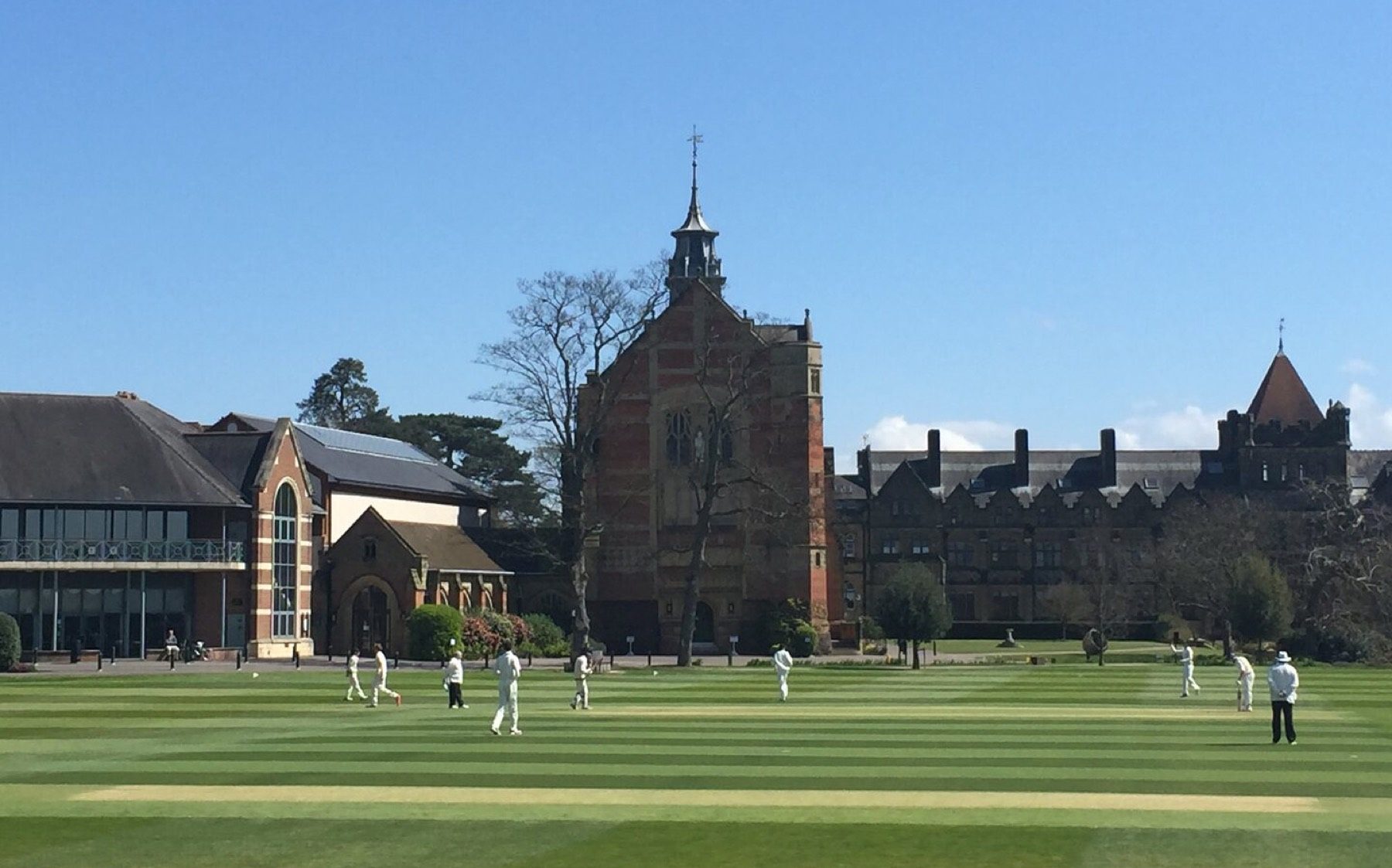
The School from The Head, today.
The Skinners' Company books. For a century these minute books are the only surviving record of the School. They are kept by the Company, not by the School.
35VIII · A merchant's school
1553
A merchant's school
A London skinner leaves money for a school in the town where he was born.
In 1553 a London merchant, Sir Andrew Judde, paid for a school in his home town and obtained a royal charter from Edward VI. He was a member of the Worshipful Company of Skinners, and when he died the Company took the school into its care.
Judde wrote the statutes that would govern Tonbridge for the next 270 years. The Skinners' Company is still its trustee. Every year the Master and Wardens still come down to hear the Headmaster give an account of the year.
What survives: The Company still appoints trustees and still comes down for Skinners' Day.
36VIII · A merchant's school
1553
A merchant's school
A London skinner leaves money for a school in the town where he was born.
In 1553 a London merchant, Sir Andrew Judde, paid for a school in his home town and obtained a royal charter from Edward VI. He was a member of the Worshipful Company of Skinners, and when he died the Company took the school into its care.
Judde wrote the statutes that would govern Tonbridge for the next 270 years. The Skinners' Company is still its trustee. Every year the Master and Wardens still come down to hear the Headmaster give an account of the year.
The Skinners' Company books. For a century these minute books are the only surviving record of the School. They are kept by the Company, not by the School.
What survives: The Company still appoints trustees and still comes down for Skinners' Day.
18
Colophon
Deus Dat Incrementum
To continue
The register of names, the films and the places continue on the other pages of this site.
The register · Films · Places
Compiled by the History Society, MMXXVI
Student names to be added